Secret Messages
There are endless ways to bring eroticism into your art. You might draw a couple embracing. Or sculpt the curves of the body. Or, of course, you could create a giant fountain in the middle of Florence with four mermaids lactating into the air (See: Fountain of Neptune). You know, different strokes for different folks.
All this to say, I’ve been doing a deep dive into erotic symbolism in classic art, and I wanted to share some of my favourite discoveries.
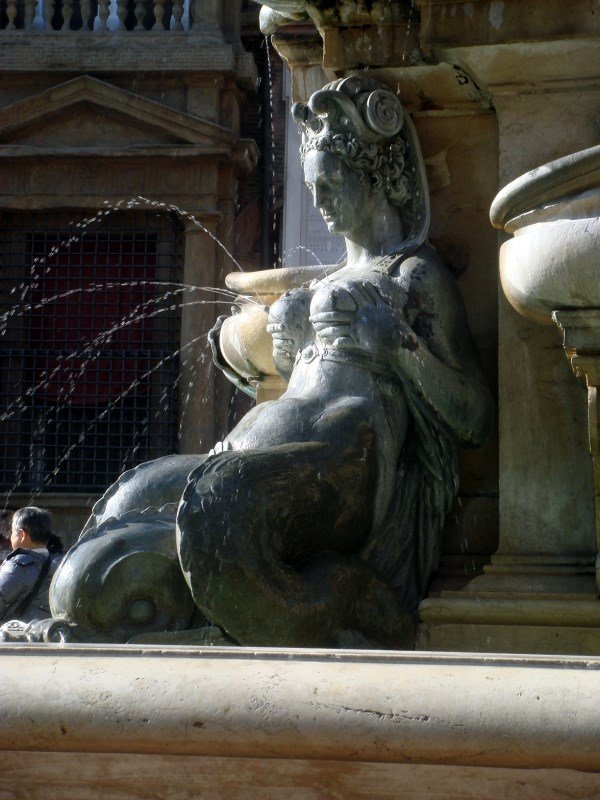
‘Fountain of Neptune’, Bartolomeo Ammannati, 1563
‘The Swing’ by Jean-Honore Fragonard, 1767
This painting looks sweet at first glance, but in true Rococo fashion, it’s not necessarily what it seems.
‘The Swing’ was commissioned by the Baron of Saint-Julien to depict him and his mistress. The Baron asked multiple artists to take on the project, but many denied him for the painting’s ‘salacious intentions’. Jean-Honore Fragonard ended up taking the commission, and it was the best career decision he ever made!
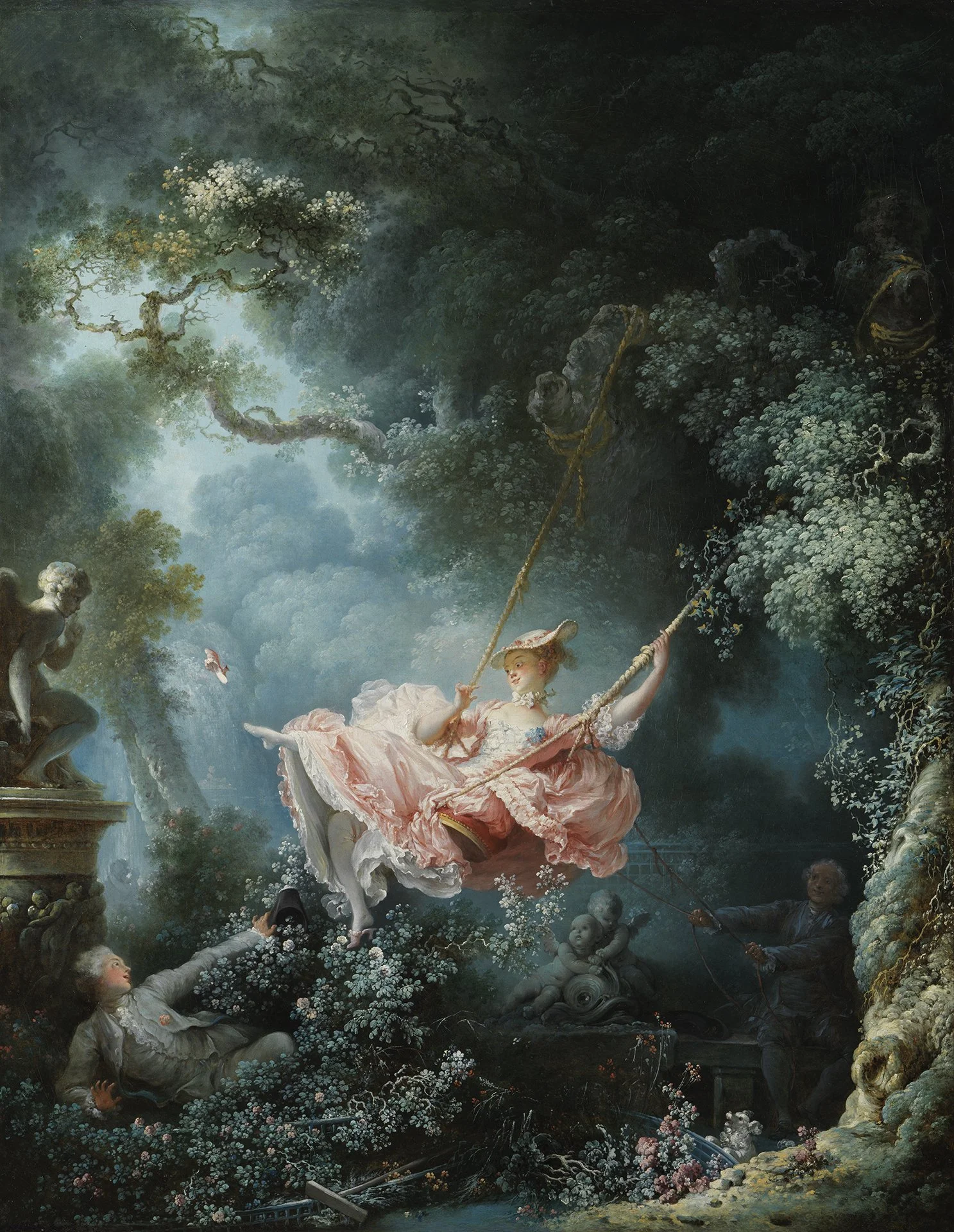
A playful young woman swings in a lush garden. Behind, her unsuspecting husband pushes the swing, while her affair partner, the Baron, lays gleefully with a perfect view up her skirt. The woman kicks her shoe off at her secret lover and reveals her ankles - which would be today’s equivalent of sending a nude. A statue of Putto, a symbol of childlike innocence, places his finger on his mouth as if keeping a secret.
Jean-Honore Fragonard uses composition to help his viewers unlock the secrets of the scene. Art historians suggest that this painting does more than just symbolise a flirtatious game, but could also allude to ‘inverted sexual intercourse’ - AKA, she’s on top!
‘The Swing’ could be one of the earliest artistic representations of cuckolding - I wonder if the husband ever saw this painting…
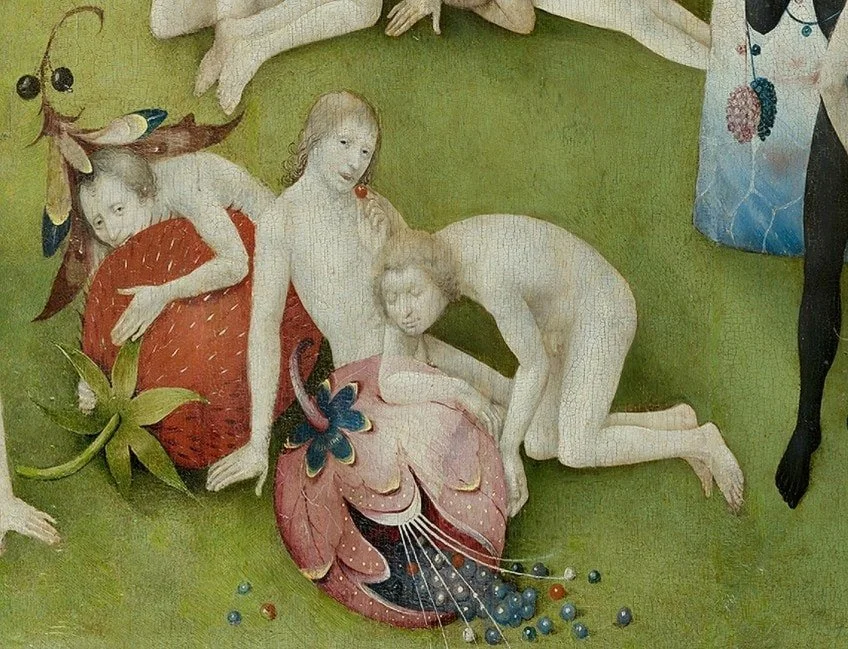
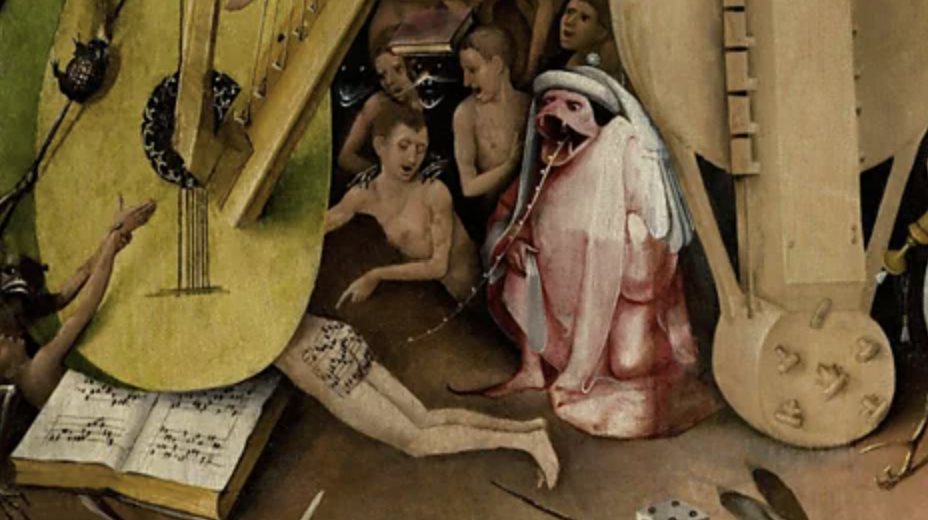
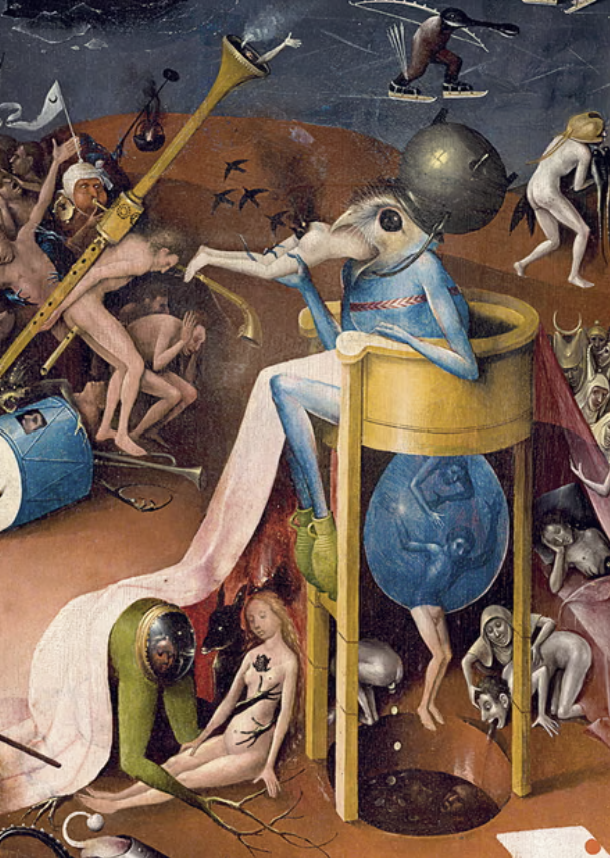
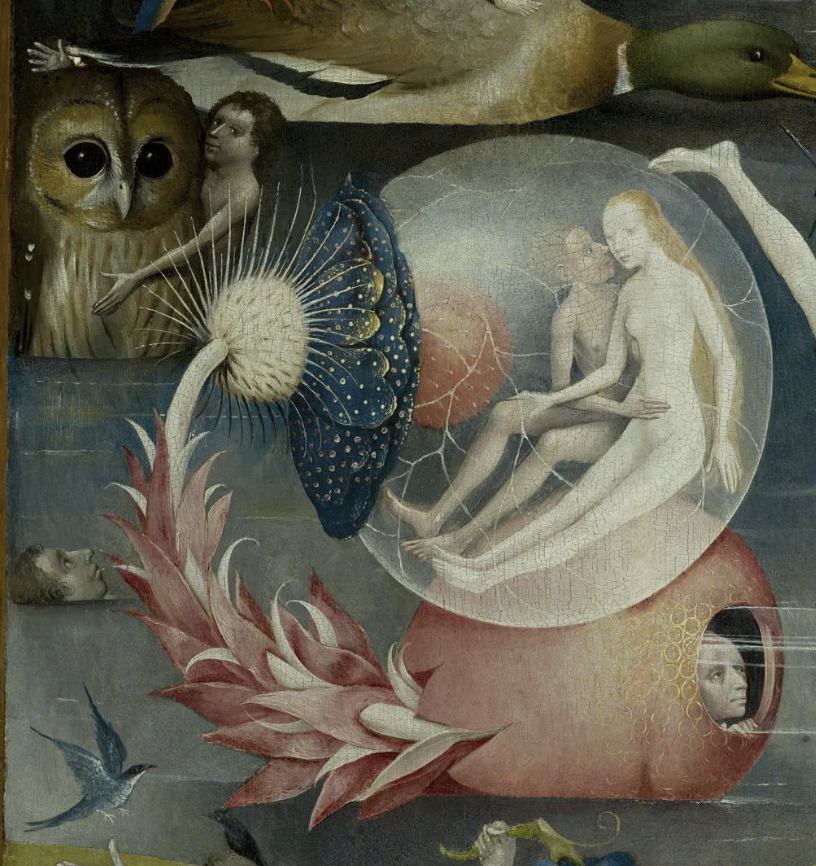
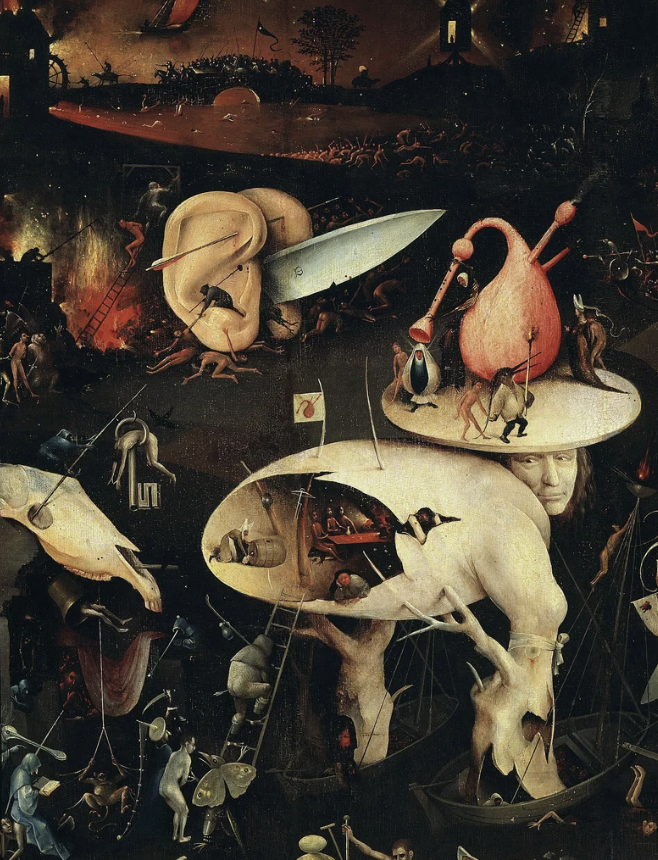
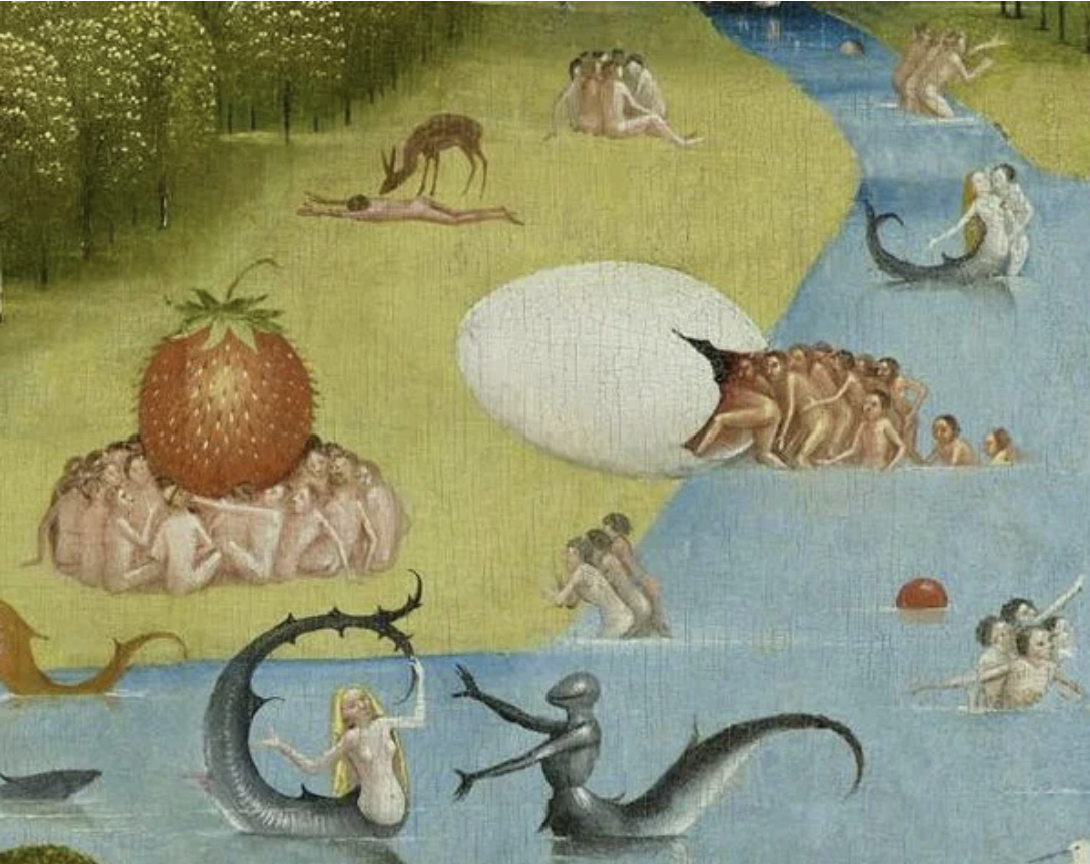
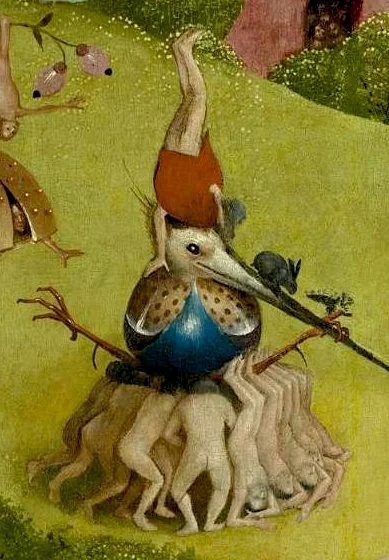
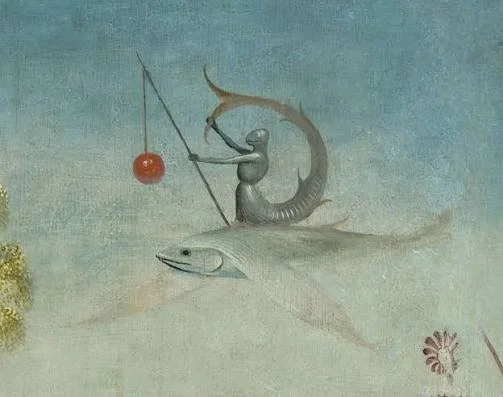
‘Garden of Earthly Delights’ by Hieronymous Bosch, between 1490 - 1500
Hieronymous Bosch is notorious for his crazy imagination, and his works are one of the most well-known examples of medieval symbolism - think trumpets up men’s butts and bird-lizard-rabbit demons. While his paintings are a fever dream, Bosch was very intentional about his work, imbuing even the silliest details with meaning and the desire to make his viewers uncomfortable.
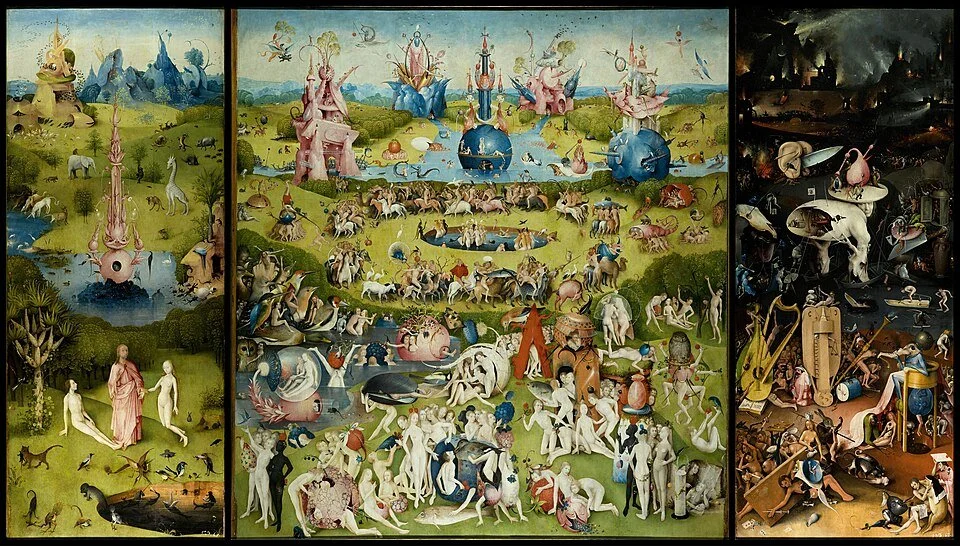
‘The Garden of Earthly Delights’, his most well known work, holds a plethora of erotic imagery, meant to scare the viewer away from the sin of lust. It’s a three-part story, from the introduction of Eve to Adam, to a garden orgy, to eternal damnation (sounds like my kind of weekend).
Here’s some of my favourite details (click each image for more info):
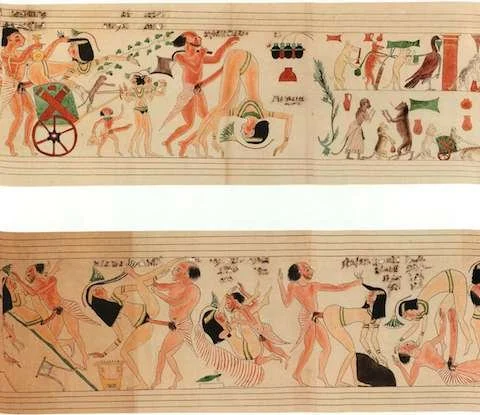
Turin Erotic Papyrus, artist unknown, Ramesside Period, approx. 1150 B.C.
This scroll papyrus painting has been referred to by art historians as the world’s first ‘mens mag’! The original scroll is unfortunately quite damaged, but there are a few restored versions out there.
The scroll offers an exaggerated depiction of a brothel, with impossibly acrobatic sex positions and exaggerated genitals in vivid colour (again, my kind of weekend). Art historians believe that the scroll was produced as satire, perhaps to entertain aristocrats, hence it’s ridiculousness.
Satirical or not, the scroll is a stunning collection of erotic imagery. It begins with a section of animals doing human tasks (feels very Sunday comics-esque), and then delves into 12 detailed vignettes of people gettin’ it on. They’re doing it on carts. They’re doing it upside down. They’re doing it with little demons. It’s awesome.
Many sections include symbols often associated with the Egyptian goddess of love and fertility, Hathor, including monkeys, lotus flowers and the sistra (an ancient rattle-style instrument).
Honestly, if a swingers party doesn’t look like this, then I want nothing to do with it!